Insulated Concrete Forms
A smarter way to build homes in the Virgin Islands
ICF combines rigid foam insulation with reinforced concrete to create walls that are stronger than traditional block, more energy-efficient, hurricane-resistant, and up to 50% less expensive to build. It's one of the most promising tools for solving the affordable housing crisis in the USVI — and it's already here.
Innovative Building Solutions: Insulated Concrete Forms (ICF)
Innovative Building Solutions
What makes ICF a game-changer?
For decades, construction in the Virgin Islands has relied on traditional concrete block — a method that is slow, labor-intensive, and increasingly expensive. Insulated Concrete Forms offer a fundamentally better approach: faster to build, stronger against storms, more comfortable to live in, and significantly cheaper over the life of the home. Here's what sets ICF apart.
Why ICF is especially right for the USVI
Built for the realities of island life.
The Virgin Islands faces a unique combination of challenges: frequent hurricanes, high energy costs, limited labor supply, expensive material imports, and strict post-Maria rebuilding demands. ICF directly addresses every single one of them — making it not just a good building method, but arguably the best-fit construction system available for the USVI today.
Watch & Learn: ICF in Action
New to ICF? These short videos are the fastest way to see how it works, what it costs, and why builders across the Caribbean are making the switch.
The Big Benefits of ICF construction
Learn how ICF can speed up construction, reduce energy bills, and create stronger homes. This video breaks down the core advantages of ICF systems, making it easy to understand why so many builders are making the switch.
Building from the Ground Up with ICF
Follow a complete ICF home build from foundation to finished walls. This full walkthrough is the best way to understand what the construction process actually looks like on a real job site — start to finish.
ICF with Insulating Gravel Explained
See how using gravel with ICF helps create insulated, moisture-resistant foundations. This video is great for builders and homeowners who want to understand the added benefits of this simple yet effective combination.
Frequently asked questions about ICF construction in the USVI
Builders & Contractors
Mortgage & Insurance Professionals
Tradespeople & Workers
Material Suppliers & Manufacturers
Architects & Appraisers
Government Agencies & Code Inspectors
Residents & Families
Community Leaders & Policymakers
What is ICF construction?
ICF stands for Insulated Concrete Form — a construction system that uses hollow, interlocking foam blocks stacked to form walls and then filled with reinforced concrete. The foam stays in place permanently, acting as built-in insulation on both sides of the wall. The result is a structure that combines the strength of poured concrete with the energy efficiency of high-grade insulation — faster to build than traditional block and significantly more resilient.
What are the main benefits of ICF construction?
ICF outperforms traditional construction in nearly every category that matters for USVI homeowners and builders:
Hurricane resistance — rated to 250 mph wind loads
Energy efficiency — up to 60% reduction in cooling costs
Fire resistance — up to 4-hour fire rating
Soundproofing — STC 50+ rating
Pest and mold resistance — no organic material in walls
Faster construction — walls poured in a single day
Lower long-term cost despite modest upfront premium
Are ICF homes more expensive to build?
ICF materials carry a modest upfront premium — typically 5–10% more than traditional block for the wall system alone. However, that cost is often offset during construction by reduced labor time and fewer required trades. Over the life of the home, ICF homeowners save significantly through lower energy bills, reduced maintenance, and in many cases, lower insurance premiums. For USVI builders, the potential 40–50% overall cost reduction comes from combining ICF's speed advantage with other innovative systems like waterless sanitation — reducing the total project cost, not just the wall cost.
How long does ICF construction take?
Faster than you might expect. ICF blocks stack without mortar — more like building with large interlocking bricks than traditional masonry. Once the forms are in place and rebar is set, concrete can be poured in a single day for an entire wall section. Compared to traditional block construction, ICF projects typically reduce wall construction time by days or even weeks — moving families into homes sooner and reducing labor costs in the process.
Is ICF construction suitable for the hot, tropical climate of the Virgin Islands?
Absolutely — in fact, the USVI is one of the best possible environments for ICF. The foam insulation keeps homes dramatically cooler than concrete block with no insulation, slashing air conditioning costs. ICF is also resistant to the mold, moisture, and pest infiltration that frequently damage homes in Caribbean climates. And of course, the 250 mph wind rating means ICF homes are purpose-built for hurricane country.
Can ICF be used under current USVI building codes?
This is one of the central challenges the IHC Campaign is working to address. Some aspects of current USVI building codes don't yet explicitly accommodate ICF construction — not because ICF is unsafe (it meets or exceeds international building code standards), but because the codes were written before these systems became widely available. Senator Marvin Blyden and the IHC are actively working with the VI Legislature to update building codes to recognize and permit ICF construction territory-wide. Learn more about the relevant code on our USVI Code 29 page.
modern construction solutions
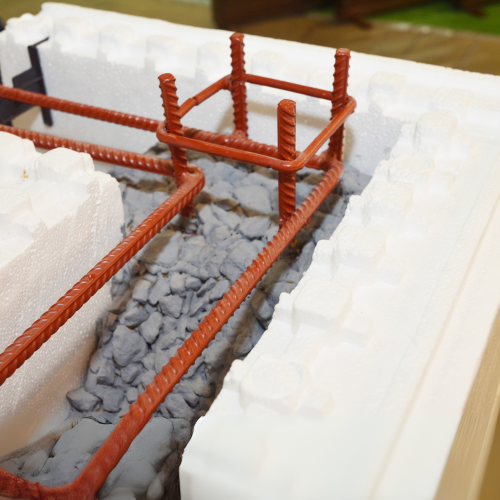
Insulated Concrete Forms (ICF) are revolutionizing how we build homes and buildings in the Virgin Islands. ICF combines rigid foam insulation with reinforced concrete to form strong, energy-efficient, and disaster-resistant walls.
This modern method is especially useful in island regions prone to hurricanes, high energy costs, and limited building space. Whether you're a builder, architect, policymaker, or homeowner, ICF offers a smarter way to build for the future.
Watch & Learn: ICF in Action
A quick cost breakdown from someone who built with ICF.
See how an ICF foundation is poured using AMVIC blocks.
What Makes ICF a Game-Changer?
ICF (Insulated Concrete Forms) makes building faster, stronger, and more energy-efficient. It’s hurricane-resistant, helps lower energy bills, and cuts down construction time. ICF also creates less waste and lasts longer, making it a smart, cost-effective choice for building in the Virgin Islands.
ICF Full-Length Videos (In-depth education and walkthroughs)
The Big Benefits of ICF
Learn how ICF (Insulated Concrete Forms) can speed up construction, reduce energy bills, and create stronger homes. This video breaks down the core advantages of ICF systems, making it easy to understand why so many builders are making the switch.
Building from the Ground Up with ICF
Follow the full journey of a home built entirely with ICF—from the basement to the roof. This video shows each step of the process and helps you visualize how ICF works on real job sites.
ICF with Insulating Gravel Explained
See how using gravel with ICF helps create insulated, moisture-resistant foundations. This video is great for builders and homeowners who want to understand the added benefits of this simple yet effective combination.
FREQUENTLY ASKED QUESTIONS
INNOVATIVE CONSTRUCTION MATERIALS: ICF (Insulated Concrete Forms)
What is ICF construction?
ICF stands for Insulated Concrete Form. It is a construction system using interlocking, hollow foam blocks that are stacked like Lego bricks, then filled with concrete. The result is a strong, energy-efficient, and highly insulated wall system used for both residential and commercial buildings.
What are the benefits of ICF buildings?
Hurricane and disaster resilience (wind rated up to 250 mph)
Energy efficiency (up to 60% less heating/cooling costs)
Soundproofing
Fire resistance (up to 4-hour fire rating)
Long-lasting durability
Faster construction time compared to traditional methods
Are ICF homes more expensive to build?
ICF homes may have a slightly higher upfront cost (5–10% more), but they save money in the long term due to lower energy bills, reduced maintenance, and increased disaster protection. Some insurance companies even offer discounts for ICF-built homes.
How long does ICF construction take?
ICF walls can be built faster than traditional block or wood frame systems. Once the forms are in place, the concrete can be poured in a single day. Overall, ICF homes often reduce total construction time by days or weeks.
Is ICF construction good for hot and tropical climates like the Virgin Islands?
Yes! ICF provides excellent thermal insulation, helping homes stay cooler in hot climates and reducing reliance on air conditioning. It’s also resistant to mold, humidity, and pests, which is essential in the Caribbean.
Want to learn more about ICF — in person, in the Virgin Islands?
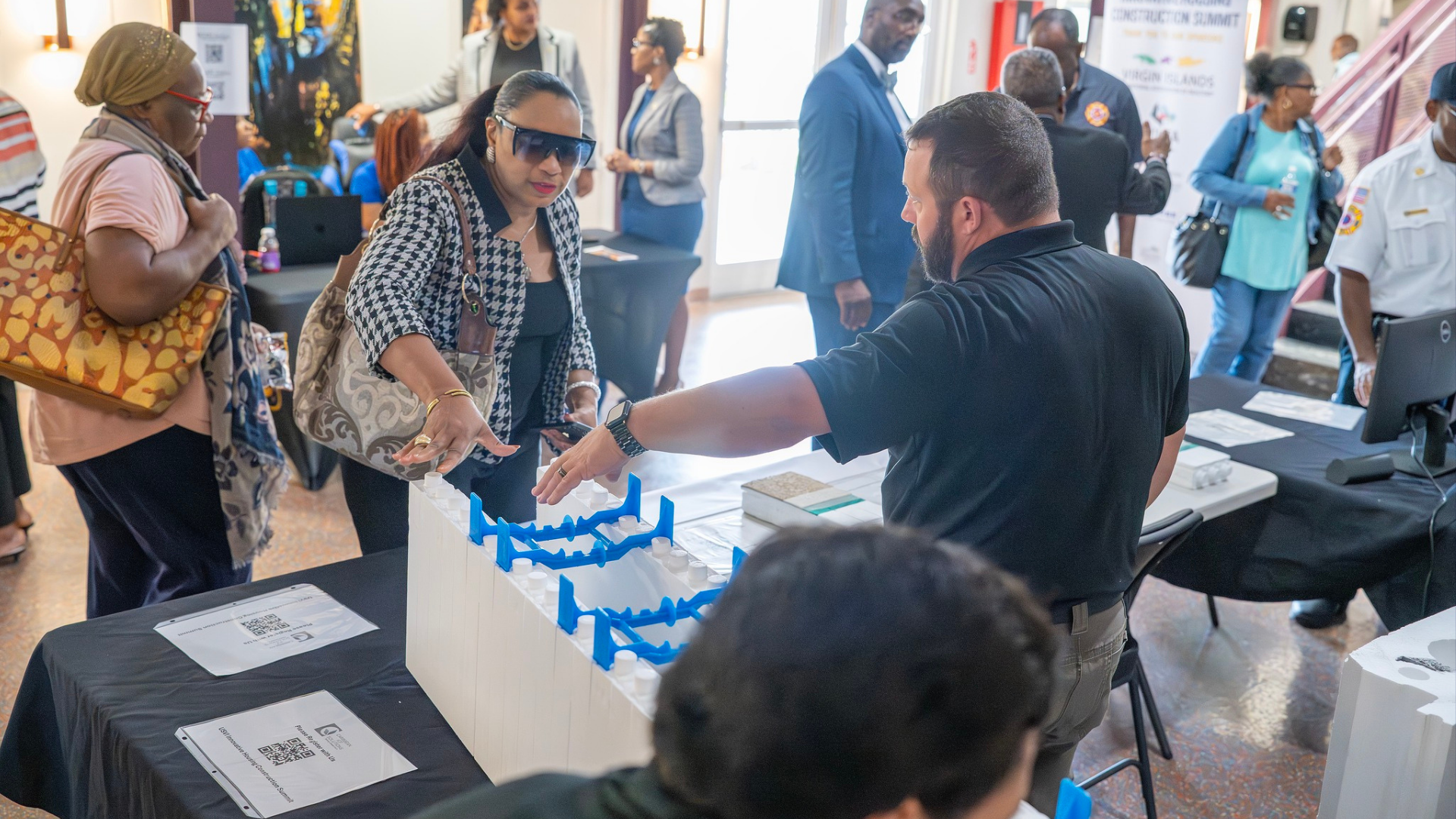
The 2026 Innovative Housing Construction Summit brings ICF experts, suppliers, and builders together with the USVI community — so you can ask questions, see demonstrations, and make connections that can actually move your project forward. Both events are free and open to everyone.
JOIN US AND BE PART OF THE SOLUTION
Reach out directly to our team for more information about upcoming events, partnership opportunities, or media inquiries. We’re here to connect, collaborate, and build solutions together.